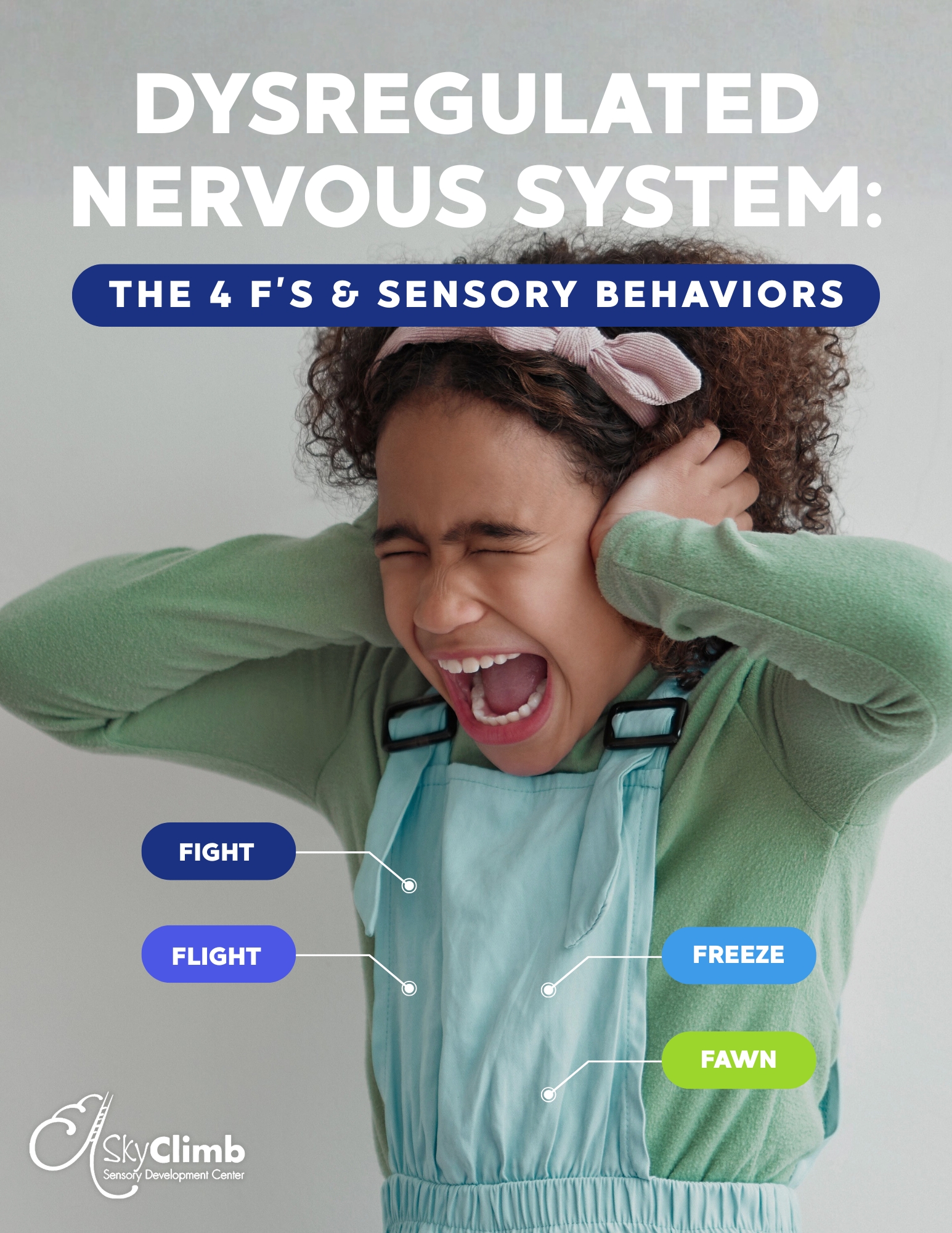

For parents navigating the labyrinth of sensory and emotional regulation challenges, the path to helping their child often feels shrouded in confusion and unmet promises. Most parents aren’t confused because they haven’t tried enough strategies. They’re confused because they’ve tried all of them. Breathing techniques. Emotion charts. Calm-down space. Trauma-informed language.
Still, nothing seems to stick.
What they’re rarely told is that some children cannot yet access those tools. Not because of resistance or avoidance, but because their bodies are working too hard just to stay organized.
After 25 years of treating children with sensory processing, emotional modulation, and motor-based challenges, and after more than a decade leading a busy pediatric occupational therapy practice, I’ve learned this: Regulation is not a mindset. It is a physiological outcome. And actual outcomes depend on understanding the inputs—the subtle, yet profound, messages children’s bodies are constantly sending, if only we know how to look.

Understanding What Children’s Bodies Are Really Telling Us
My work as an occupational therapist lives at the intersection of movement, sensation, endurance, and daily function. I don’t just listen to what children say; I watch how they move, recover, eat, transition, and organize themselves throughout their day.
The children who struggle most are often described as:
- emotionally volatile
- impulsive or rigid
- inattentive or overfocused
- resistant to transitions
- extremely selective with food
What I see underneath those labels is not a lack of coping skills or intentional defiance, but sensory systems under constant load, signaling distress in the only way they know how. This fundamental shift from a behavioral lens to a physiological one is often the missing piece in helping your child.

A Child I’ll Always Remember
Several years ago, I worked with a young girl who had experienced severe abuse prior to adoption by her foster mother. By the time she arrived at my clinic, she was already surrounded by a team of skilled, trauma-informed therapists doing thoughtful, careful work.
And yet, progress had stalled.
She would not talk about what had happened to her. Attempts to explore her history went nowhere. Sessions intended to support processing remained surface-level, not because she was resistant, but because something more fundamental was in the way.
From an occupational therapy lens, the signs were unmistakable. Her sensory system was in constant overdrive. She sought movement relentlessly—not for play or joy, but for survival. No amount of activity seemed to satisfy her need for motion, and without structure, her movement became increasingly unsafe. She could not tolerate stillness, and interactions with peers were rarely successful. Any attempt to slow her body or direct attention inward only caused further escalation. She wasn’t avoiding reflection—it was completely inaccessible for her.
She wasn’t “not ready” to talk; she was unable to access what she needed to talk about. Because of this, we did not begin with narrative work. We did not ask her to remember. We did not push insight.
Instead, we began with intensive sensory-based intervention, structured proprioceptive input, heavy work, rhythmic movement, and deep pressure, designed to help her body locate itself safely in space—something it had been trying and failing to do through her constant movement.
After only a few sessions, something shifted.
I had been working with her consistently for about a month. On the drive home immediately following one of our sessions, she completely unraveled in the car with her adoptive mother. And for the first time, she began to speak, not in fragments or defensiveness, but with access and continuity. She was able to share aspects of her traumatic experience that had previously been unreachable.
That moment did not happen because someone finally asked the right question. It happened because her body had enough organization to allow memory and language to surface.
This is what sensory-based occupational therapy makes possible. This profound shift, from persistent dysregulation to genuine processing, underscores the power of addressing the physiological roots of regulation. It’s a testament to why my approach, grounded in understanding the body’s language, often unlocks progress where other therapies have stalled.

Sensory Processing Can Be the Missing Layer
Sensory processing is not a soft concept. It is mechanical, chemical, and neurological.
Proprioceptive input (resistance, weight-bearing, joint compression) provides the body with information about where it is in space. Without it, children struggle to modulate force, attention, and emotion.
This is why occupational therapists refer to proprioception as the Master Modulator. When it is consistently supported, children often show:
- improved emotional recovery
- reduced sensory defensiveness
- better sleep and attention
- more flexible behavior
But even the most expert sensory intervention, while foundational, can stall if the body’s internal environment is unstable. This is another critical, often-overlooked dimension in traditional therapeutic models, and it leads directly to the next key component of my work: nutrition. Proper regulation requires a holistic approach.

ReFUEL by nourishing their body with what it truly needs, while removing the hidden dietary stressors that make regulation harder.

ReWIRE the brain’s sensory pathways so your child can handle their environment with less overwhelm and more calm.

ReWORK the primitive reflexes (automatic body movements) that might be keeping them stuck or stalling their progress.

ReCONNECT through supportive interactions that build the deep sense of trust and safety your child is looking for.

Nutrition Through a Functional Lens
In my practice, nutrition is approached functionally, as another vital “input” to the system. Food is not just fuel; it is sensory input that affects stamina, modulation, and recovery.
Nutrition is often treated as an afterthought in therapy. In our practice, it’s part of the clinical reasoning. We ask questions like:
- What happens to postural endurance when protein intake is inadequate?
- How does blood sugar dysregulation show up as impulsivity, fatigue, or emotional outbursts?
- How does gut discomfort lower a child’s threshold for sensory input?
Highly processed foods offer predictable stimulation but little regulatory value. Over time, they increase sensory noise while reducing a child’s ability to recover.
When we support nutrition alongside sensory work, we often see changes that feel “behavioral” but are actually physiological wins.

The SkyClimb Method: Unlocking Deeper Regulation
Parents often ask how I know where to start—nutrition, structured proprioceptive input, heavy work, something else entirely? The answer isn’t just intuition; it’s pattern recognition refined over decades, and a deep understanding of how these complex systems intertwine. This holistic integration of often-separate therapeutic elements forms the core of The SkyClimb Method.
My diagnostic lens first focuses on the subtle yet critical cues children’s bodies provide. I look at:
- Movement quality: How efficiently and effectively do they navigate their environment?
- Fatigue thresholds: At what point does their system deplete, and how does it manifest?
- Sensory seeking or avoidance patterns: What are their bodies truly needing or rejecting?
- Timing of dysregulation: When do challenges typically arise? What seems to trigger them?
- Recovery speed: How quickly can they regain equilibrium after a disruption?
It’s this detailed, body-first assessment that shaped The SkyClimb Method—a comprehensive framework designed to put the brain to purposeful work by first stabilizing the body, priming physiology through nutrition, and then layering sensory input in specific combinations to support organization, safety, and adaptive response.
At its core, The SkyClimb Method is built upon four interconnected principles, systematically addressing the underlying mechanisms of regulation:
- ReFUEL with what nutrition the body needs and strategically remove what creates unnecessary strain.
- ReWIRE inefficient sensory processing pathways to create more adaptive responses.
- ReWORK primitive reflex integration patterns that may be hindering development.
- ReCONNECT through consistent, supportive interactions that build security and trust.
A Broader Invitation
If we want children to function better—not just behave better—we must look beyond labels and strategies applied too early.
Ask what the body is compensating for.
Ask what systems are being overloaded.
Ask whether the inputs match the demand.
That shift—from a behavioral to a physiological lens—can change everything. It’s an invitation to move beyond surface-level interventions and truly understand the body’s profound influence on regulation.
If you’re a parent feeling unheard, or a professional seeking a more integrated path, I invite you to explore how understanding the body’s language can unlock your child’s potential for lasting peace and function, and explore The SkyClimb Method.
About the Author
Terin Morton Fetty, OTD, OTR/L, is a pediatric occupational therapist with over 25 years of clinical experience supporting children with sensory processing challenges, emotional modulation difficulties, and motor-based delays. She is the founder and clinical director of SkyClimb Sensory Development Center, a private pediatric practice she has successfully led for more than a decade. Terin integrates sensory-based occupational therapy, functional nutrition principles, and developmental neuroscience through her proprietary framework, The SkyClimb Method. Learn more at https://skyclimbcenter.com/ or explore the SkyClimb Method course at https://skyclimbcenter.com/course-landing/.